
Identifying Red Flags in Hiring: Warning Signs Employers and Candidates Shouldn’t Ignore
Hiring the right person starts with spotting early red flags—signals that a candidate may be a poor fit, unreliable, or misrepresenting their experience. This guide shows what those red flags look like across resumes, interviews, communications, and online profiles, why they matter for talent recruitment and business results, and what employers and candidates can do to avoid costly mistakes. Recruiters will find practical detection steps and verification checklists; candidates will get concrete fixes to reduce misunderstandings. The article covers common candidate red flags, the financial and cultural costs of bad hires, structured detection methods for hiring teams, candidate-side remediation using specific RecruitEye tools, and the top five interview warning signs hiring teams must not miss. Keywords such as resume red flags, interview red flags, communication red flags recruitment, and how to detect candidate red flags are used with clear semantics to help both people and search engines.
What Are the Most Common Candidate Red Flags in Recruitment?
Candidate red flags are observable issues in application materials or interactions that raise hiring risk. They show up as resume formatting problems, vague achievement statements, inconsistent dates, poor communication, or interview behaviors that suggest a lack of preparation or integrity. Treat these signals as hypotheses to test—not automatic disqualifiers—and follow up with targeted questions and verification. Below is a quick list of frequent red-flag categories and how to triage initial concerns before deeper checks.
- Resume formatting red flags: cause ATS rejections or look unprofessional.
- Interview red flags: show up as evasive answers or weak situational examples.
- Communication red flags: slow responses, unprofessional tone, or contradictory facts.
- Web profile red flags: public profiles that conflict with the submitted resume.
- Reference and verification red flags: referees who provide vague or noncommittal feedback.
These categories map directly to what to watch for during resume screening and early interviews, and they set up the next section on resume-specific warning signs.
Which Resume Red Flags Signal Potential Hiring Risks?
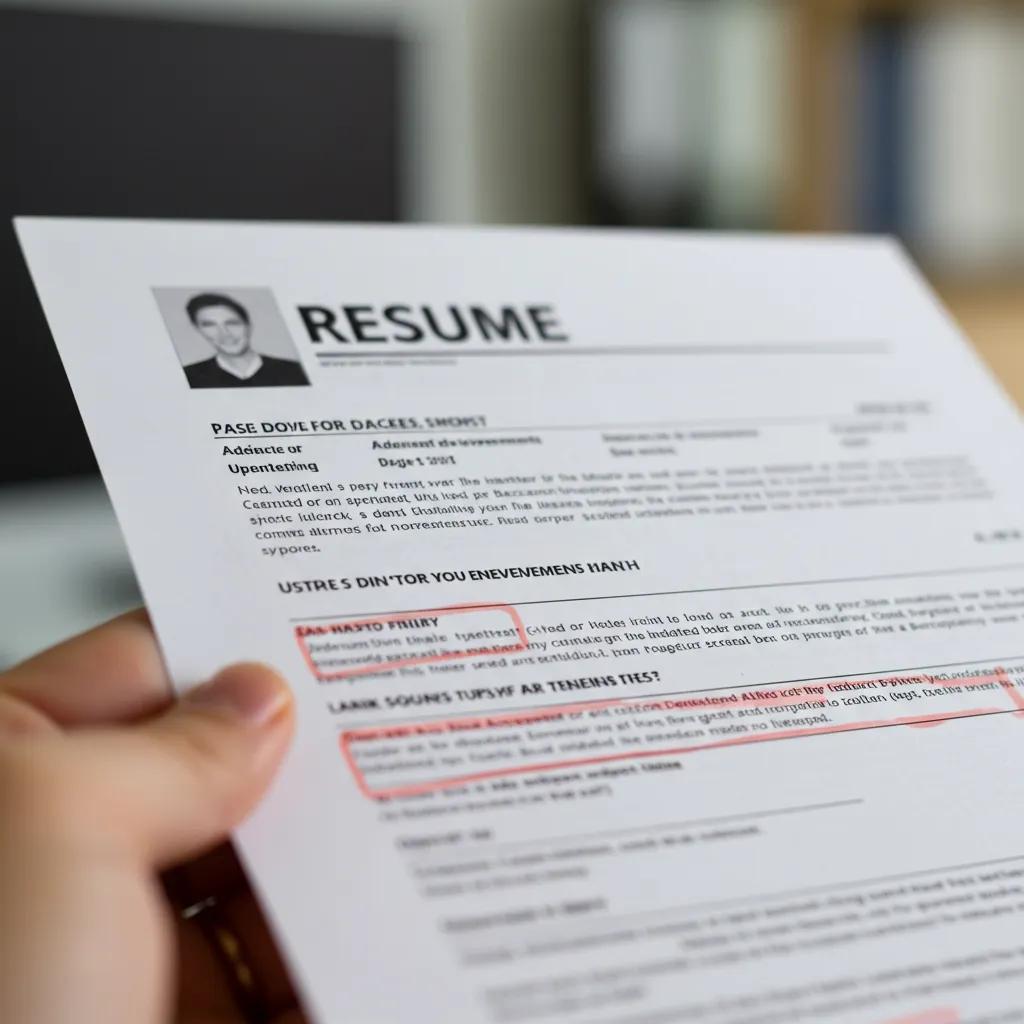
Resume red flags are formatting or content issues that hurt credibility or fail ATS parsing—and they often predict downstream fit or performance problems. Common signs include inconsistent job dates, unexplained gaps, many short-term roles, role descriptions without measurable outcomes, and odd formatting that breaks parsing. Recruiters should scan for header errors, work history inconsistencies, and sparse skills sections to quickly triage candidates. A short verification checklist helps distinguish mere sloppiness from substantive qualification gaps.
Different resume problems call for different recruiter responses and candidate fixes. The table below compares common issues, why they matter, and practical next steps.
| Resume Issue | Why it Matters | Recruiter Interpretation / Resolution |
|---|---|---|
| Inconsistent dates | May indicate inattention or concealment | Ask the candidate to clarify the timeline and request references for overlapping periods |
| Vague achievements | Hard to assess impact | Probe for metrics and examples in the interview; request work samples |
| Non-ATS formatting | Can be filtered out by systems | Request a plain-text version and manually review keyword relevance |
| Job-hopping | Potential instability or poor fit | Ask why roles were short and look for patterns across the career |
| Missing education or credential details | Creates verification needs | Request documentation or professional registration details during screening |
These targeted next steps convert resume signals into testable questions that feed into interview evaluation.
How Can Interview Red Flags Reveal Candidate Suitability?
Interview red flags are behavioral signals that point to gaps in preparation, communication, or integrity—and they help predict on-the-job performance and cultural fit. Examples include evasive answers to competency prompts, stories that contradict the resume, an inability to offer specific examples, or repeated blame-shifting. Use structured behavioral prompts (Situation, Task, Action, Result) to draw out measurable evidence and separate nerves from real concerns. Focused probing turns vague red flags into clearer assessments that guide reference checks and hiring decisions.
Preparing follow-up questions and using scoring rubrics reduces reliance on gut instinct and prepares teams for the reference-check stage detailed below.
What Communication Red Flags Should Recruiters Watch For?
Communication red flags appear in email subject lines, timeliness of replies, tone, and consistency across channels—signals of reliability and professionalism. Problems include missing or misleading subject lines, poor grammar in application emails, slow or evasive scheduling responses, and discrepancies between written and verbal statements. Establish communication scoring criteria—timeliness, clarity, consistency—to standardize assessments. A quick verification step, like confirming key facts by email, often exposes contradictions and informs next-stage decisions.
Consistent communication usually indicates dependability, which leads into how red flags affect business outcomes.
How Do Hiring Red Flags Impact the Recruitment Process and Business Outcomes?
Missed red flags can cause measurable financial and operational harm: higher recruiting and onboarding costs, lost productivity during ramp-up, and lower team morale. The cost of a bad hire includes advertising and agency fees, interview and onboarding time, lost output while the person ramps, potential severance, and the hidden cost of diverted management attention. Non-financial effects—lower engagement, reputational risk with clients, and disruption of strategic initiatives—are also serious. Understanding these consequences helps justify spending time on detection and verification instead of rushing to fill roles.
| Red Flag Type | Impact Area | Estimated Outcome |
|---|---|---|
| Dishonesty (falsified credentials) | Compliance, legal risk | High: potential termination and liability |
| Poor communication | Productivity, client relations | Medium: missed deadlines and errors |
| Cultural mismatch | Retention, morale | Medium–High: increased turnover and lower engagement |
| Skill overstatement | Performance, project delivery | High: missed targets and rework |
These mappings help teams decide how much verification a given concern warrants based on likely business impact.
What Is the Financial Cost of a Bad Hire?
Costs vary by role but typically include advertising and agency fees, interview and onboarding time, lost productivity during ramp-up, and replacement expenses. For frontline positions, turnover can amount to a large portion of annual salary; for senior roles, costs rise sharply because of lost strategic momentum and higher hiring fees. Breaking the cost into recruiting, onboarding, productivity loss, and separation makes it easier to judge when to invest in background checks or extended probation. Framing the cost in clear buckets helps leaders back stronger detection practices.
Estimating these costs also highlights why dishonesty and cultural mismatch deserve careful attention.
How Does Dishonesty Affect Talent Recruitment?
Dishonesty—exaggerated responsibilities, fabricated credentials, or fake references—erodes trust and can create regulatory or reputational exposure. Catching dishonesty early reduces downstream disruption but requires steps like credential checks, reference validation, and corroborating accomplishments with tangible evidence. Current best practice mixes automated verification tools with human checks to balance speed and rigor. When dishonesty is discovered late, remediation is costly and often harms team dynamics irreversibly.
These verification practices connect directly to assessing culture fit and structured interviewing techniques covered next.
Why Is Cultural Fit a Critical Red Flag in Hiring?
Cultural fit measures how a candidate’s behaviors align with an organization’s norms and affects retention, collaboration, and performance. Misfit shows up as repeated friction, resistance to feedback, or failure to follow core processes. Assess fit through behavioral prompts focused on values and teamwork, plus cross-functional interviews for broader perspective. Relying only on gut instinct risks bias; structured rubrics and panel feedback give objective data to evaluate alignment.
Assessing fit with structured methods prepares employers to detect red flags effectively—outlined next in procedural detail.
How Can Employers Effectively Detect Red Flags During Recruitment?
The best way to detect red flags is with structured hiring practices: consistent scorecards, behavior-based interviews, standardized reference checks, and clear escalation paths for concerns. Start with a scorecard that maps role-critical competencies to observable behaviors, then ask behavioral questions that force candidates to describe concrete actions and outcomes. Verification steps—credential checks, targeted references, and work samples—add objective confirmation. Finally, set triage rules: minor issues prompt follow-up interviews; major inconsistencies trigger deeper checks or disqualification.
- Use scorecards to rate core competencies consistently across candidates.
- Ask STAR-based questions (Situation, Task, Action, Result) to draw out concrete evidence.
- Verify claims through references and credential checks.
- Escalate serious inconsistencies to HR or hiring leadership for review.
These steps reduce bias and increase detection accuracy. They also connect to prevention—candidates who use structured tools reduce many common red flags, as described below.
What Behavioral Warning Signs Should Interviewers Identify?
Behavioral warning signs include evasiveness, frequent blaming, inconsistent timelines, and an inability to provide specific results from past work. Interviewers should record these signals alongside scorecard ratings and ask probing questions like, “What specifically did you do?” and “What measurable outcome followed?” Weight honesty, accountability, and concrete results in your scoring framework to quantify concerns. Consistent documentation supports defensible hiring decisions and more rigorous reference checks.
Well-documented behavioral notes also make it easier to cross-check claims with references and any candidate work samples.
How to Evaluate References and Post-Interview Signals?
Use a consistent reference-question set that targets reliability, performance, and behavioral tendencies, and probe any inconsistencies found in interviews. Watch post-interview signals—late or unprofessional follow-up, sudden changes in availability, or evasive salary answers—as these can indicate risk and should be clarified before offers. A short checklist helps teams interpret reference feedback and post-interview behaviors objectively. Ask for specific examples of strengths and development areas to get actionable insights.
Interpreting these signals leads to practical best practices for avoiding hiring mistakes.
What Best Practices Help Recruiters Avoid Hiring Mistakes?
Best practices include structured interviews, cross-functional panels, validated scorecards, and using ATS analytics to flag anomalies. Standardized rubrics reduce bias and allow consistent comparisons, while broader interviewer involvement reveals fit issues earlier. Maintain a verification workflow for high-impact roles and document all key assessment findings to support decisions. Candidates who proactively address common red flags—through clear resumes and aligned digital profiles—also reduce hiring risk, bridging employer detection and candidate prevention with targeted tools.
At the end of a structured workflow, candidates who follow preventative guidance remove many common concerns—highlighting why candidate-side tools matter.
How Can Candidates Avoid Common Red Flags with RecruitEye’s Tools?
Candidates can remove many red flags by using focused tools that fix resume format, sharpen application language, standardize email communication, and align online profiles. RecruitEye provides resources to improve candidate presentation: an ATS-friendly Resume generator, a Cover Letter builder, Email communication tools, and a Web Profile creator that centralizes a consistent digital presence. These tools help candidates correct formatting, optimize keywords for ATS, create role-specific cover letters, use professional email templates, and reconcile resume and web profile discrepancies. Practical steps—clean formatting, quantified achievements, timely professional responses, and aligned online profiles—lead to fewer recruiter concerns and more interview invites.
| RecruitEye Tool | Red Flag Prevented | Practical Outcome |
|---|---|---|
| ATS-friendly Resume generator | Non-ATS formatting and vague achievements | Better parsing, clearer metrics, higher screening pass rates |
| Cover Letter builder | Generic applications and weak role-fit messaging | Tailored narratives that show fit and intent |
| Email communication tools | Unprofessional subject lines and delayed responses | Consistent professional tone and timely follow-up |
| Web Profile creator | Inconsistent or incomplete online profiles | Cohesive digital branding that matches resume claims |
These interventions lower recruiter friction and directly address the red flags described earlier, making candidates easier to evaluate and more likely to move forward.
How Does RecruitEye’s ATS Resume Generator Prevent Resume Red Flags?
RecruitEye’s ATS-friendly Resume generator standardizes formatting, brings measurable achievements forward, and optimizes keyword placement so ATS and recruiters can read credentials accurately. The generator prompts candidates to replace vague summaries with quantified results and choose clean headers that improve parsing. A before-and-after example—turning an infographic-style resume into a parsed, metrics-led document—shows the practical gain. Candidates can run quick checks for keyword density and formatting consistency, then iterate until the resume presents a clear, verifiable record.
Using this targeted tool reduces screening rejections and the appearance of avoidable red flags.
Pre-Employment Indicators of Performance Deficiencies in Academic Recruitment
Faculty showing pre-employment red flags had a higher likelihood of later performance problems. This study highlights the importance of identifying and addressing pre-employment indicators to prevent performance issues and financial losses in academic hiring.
Early Predictors of Performance Deficiencies in Academic Faculty: Pre-Employment Red Flags, WO Cooper, 2021
What Cover Letter Tips Help Eliminate Application Red Flags?
Cover letters that skip generic lines and instead highlight role-relevant achievements reduce red-flag perceptions about motivation and fit. Candidates should open with a concise reason for applying, give one or two measurable examples that match the job, and close with a clear next-step request. Avoid clichés and long narratives—stay focused on fit and impact. RecruitEye’s Cover Letter builder helps structure content so each paragraph proves relevance and avoids ambiguity that triggers recruiter skepticism.
Clear, focused cover letters make it easier for recruiters to validate claims in interviews and references.
Recruitment Red Flags: Factors Influencing Applicant Decisions in Emergency Medicine
To examine how red flags relate to applicant characteristics, this study used adjusted logistic regression. It investigates factors influencing residency choice, including how applicants identify recruitment red flags.
Factors influencing emergency medicine residency choice: diversity, community, and recruitment red flags, PL Weygandt, 2021
How Can Professional Email Communication Avoid Red Flags?
Professional email habits prevent red flags: use clear subject lines, concise bodies, and consistent signatures with contact details. Respond within agreed timelines or communicate delays proactively, and keep tone neutral and polite when negotiating or following up. Short templates with role-specific subject lines and structured messages reduce misinterpretation and show reliability. RecruitEye’s Email communication tools provide examples and templates candidates can adapt to keep exchanges professional and consistent.
Strong email habits support the credibility established by resumes and interviews and are often the first impression recruiters act on.
Cybervetting and Background Checks: Identifying Red Flags in Recruitment
Although cybervetting is increasingly common, systematic background checks remain effective for identifying job-related red flags. An HR practitioner noted that while cybervetting is on the rise, traditional background checks still play a vital role in uncovering issues.
The hunt for red flags: Cybervetting as morally performative practice, S McDonald, 2022
Why Is Building a Strong Web Profile Essential to Avoid Digital Red Flags?
A strong web profile aligns headline, summary, and experience with the resume to avoid discrepancies that worry recruiters, and it offers curated work samples that back up claims. Inconsistent dates, different job titles, or missing role descriptions on public profiles create immediate red flags. Candidates should reconcile all public-facing information, use evidence-based summaries, and favor clarity over embellishment. RecruitEye’s Web Profile creator helps centralize these elements so candidates present a unified, verifiable digital narrative that reduces heavy-handed verification by recruiters.
A consistent digital presence closes the gap between application materials and what employers find during vetting.
What Are the Top 5 Interview Red Flags Employers Should Never Ignore?

Hiring teams should focus on a short list of interview red flags that most reliably predict on-the-job problems. These five priorities help interviewers decide when to probe further, pause an offer, or run deeper verification. Below is a ranked list of critical red flags with immediate actions interviewers can take.
- Dishonesty or factual inconsistencies: Verify claims with references and documentation right away.
- Poor communication: Ask clarifying questions and request a short work sample or written follow-up.
- Lack of preparation: Pose role-specific questions to see if answers reflect company context and research.
- Negative attitude toward past employers: Probe conflict resolution and look for ownership language.
- Overemphasis on compensation early: Redirect to motivation and long-term goals before negotiating.
This ranked approach helps teams respond consistently when different interviewers encounter the same red flags and guides deeper probing for each indicator.
How Does Poor Communication Signal Candidate Risk?
Poor communication—unclear answers, rambling responses, or weak listening—often predicts trouble with teamwork and client interaction. Interviewers should separate nerves from a persistent inability to present structured thoughts by asking for concise summaries and watching for improvement. Use a small rubric to score clarity, relevance, and responsiveness. If concerns persist, request a written follow-up or a short presentation to observe communication in another format—this informs final hiring decisions.
Those probing tactics also reveal whether issues are situational or reflect deeper capability gaps.
Why Is Lack of Preparation a Warning Sign?
Lack of preparation—seen in generic answers, no role-specific questions, or limited knowledge of the company—signals low engagement and risky on-the-job initiative. Use scenario-based questions that require role insight; genuinely interested candidates will engage, while unprepared ones struggle. Preparation tends to correlate with performance and learning willingness, so follow-up tasks or case questions can test real interest. If gaps remain, weigh them against references and past work samples before advancing an offer.
Assessing preparation helps distinguish short-term nerves from persistent disengagement.
How Can Negative Attitude Affect Hiring Decisions?
Repeated negativity—blaming colleagues or employers—predicts behaviors that erode team cohesion and morale. Ask for examples of conflict resolution and look for ownership language. If negativity appears across interviews, involve potential teammates for broader input. When negative patterns are confirmed, either decline or consider only narrowly defined roles where close oversight and coaching reduce risk.
Spotting this early prevents long-term cultural damage and turnover costs.
What Role Does Dishonesty Play in Interview Red Flags?
Dishonesty in interviews—exaggerated accomplishments, evasive answers, or contradictions—breaks trust and requires verification through references, credential checks, and documented evidence. Follow-up questions and targeted reference probes usually reveal inconsistencies quickly. Hiring without verification when dishonesty is suspected exposes teams to large downstream risks. When dishonesty is confirmed, rescind offers and document findings to improve future screening.
Prompt verification protects teams and cuts the cost of rehiring.
Why Is Overemphasis on Compensation a Red Flag?
An early, persistent focus on pay—without discussing role expectations or growth—can signal misaligned motivation and higher attrition risk. Distinguish fair negotiation from compensation-first behavior by asking about career goals and what the candidate values in a role. If pay dominates and long-term fit looks weak, probe motivations further or deprioritize the candidacy. Balance fair offers with evidence of alignment to avoid expensive mismatches.
When unsure, combine motivation probes with reference checks to validate longer-term intent and finish with a clear call to action: candidates who proactively address red flags using structured tools like RecruitEye’s ATS-friendly Resume generator, Cover Letter builder, Email communication tools, and Web Profile creator reduce misunderstandings and improve hiring outcomes.
Frequently Asked Questions
What steps can employers take to mitigate the risks associated with red flags during recruitment?
Employers should adopt structured hiring practices: standardized scorecards for consistent evaluation, behavioral interviews that demand specific examples, and thorough reference checks. Establish clear escalation paths for concerning findings and document assessment results so decisions are transparent and defensible. These steps reduce bias and improve hiring outcomes.
How can candidates effectively prepare for interviews to avoid raising red flags?
Candidates should research the company and role, practice answers to common questions, and prepare specific examples that show measurable impact. Be ready to explain your career path and how it aligns with the employer’s goals. Clear, concise communication helps avoid misunderstandings and presents you as engaged and prepared.
What role does social media play in identifying candidate red flags?
Social media offers insight into a candidate’s professional persona and behavior. Recruiters often review public profiles for professionalism, communication style, and cultural fit. Discrepancies between online profiles and application materials can raise red flags. Candidates should ensure public profiles reflect their professional brand and match their resume and cover letter.
How can employers address red flags without bias during the hiring process?
To reduce bias, use structured interview techniques and agreed evaluation criteria: ask the same questions of all candidates, score responses objectively, and involve multiple interviewers for diverse perspectives. Train hiring teams on unconscious bias and apply a clear decision framework so candidates are judged fairly on qualifications and fit.
What are some common misconceptions about red flags in recruitment?
A common misconception is that any red flag automatically disqualifies a candidate. Many flags need context—an employment gap, for example, can stem from caregiving or education. Another misconception is that only negative traits are red flags; traits like overconfidence can also indicate risk. Understanding nuance lets recruiters make more informed decisions.
How can technology assist in identifying recruitment red flags?
Technology helps by automating checks and surfacing anomalies: ATS tools flag formatting or consistency issues, automated background checks verify credentials quickly, and AI analytics can spot patterns that suggest risk. Used correctly, technology streamlines detection and enables more efficient, thorough candidate evaluation.
What should candidates do if they realize they have a red flag in their application?
If candidates spot a red flag, address it proactively in the cover letter or during the interview. Explain gaps or anomalies, highlight any skills or learning gained during that time, and be transparent. Owning the issue and providing context shows integrity and can ease recruiter concerns.
**
