
Optimize Your Resume for ATS Success – RecruitEye, LLC
In today’s competitive job market, understanding how to optimize your resume for Applicant Tracking Systems (ATS) is crucial for job seekers. This article will guide you through the best practices for creating an ATS-friendly resume that not only passes automated screenings but also impresses hiring managers. Many candidates struggle with the intricacies of ATS, often leading to missed opportunities. By implementing effective strategies, you can enhance your chances of landing interviews. We will explore what ATS is, how to optimize your resume keywords, the best formats to use, and how to tailor your resume for specific job applications.
What Is an Applicant Tracking System and Why Does It Matter?
An Applicant Tracking System (ATS) is software used by employers to manage the recruitment process, including the collection, sorting, and ranking of resumes. ATS streamlines the hiring process by filtering out unqualified candidates based on specific criteria set by employers. Understanding how ATS works is essential for job seekers, as it directly impacts their chances of being noticed by recruiters. Statistics show that over 95% of large companies use ATS to screen resumes, making it a critical component of the job application process.
Further emphasizing the importance of ATS, research highlights how these systems are fundamental in screening resumes based on formatting and keyword optimization.
ATS Resume Optimization: Formatting & Keywords
resumes are formatted, structured, and keywordoptimized to optimize their resumes for Applicant Tracking Systems used. An Applicant Tracking System (ATS) is a software tool used by employers to manage and screen job applications.
Resume Optimization Tool for Job Seekers, 2025
How Does ATS Software Screen and Rank Resumes?
ATS software screens resumes by using algorithms that analyze keywords and phrases relevant to the job description. Resumes are ranked based on how well they match the job requirements, with higher-ranking resumes being more likely to be reviewed by hiring managers. Common pitfalls include using non-standard fonts, graphics, or complex formatting that can confuse the software. To improve your chances, ensure your resume is straightforward and keyword-rich.
What Are the Latest Trends in ATS and AI Recruitment Technology?
Recent advancements in ATS technology include the integration of artificial intelligence (AI) to enhance the screening process. AI can analyze resumes more effectively, identifying not just keywords but also contextual relevance. This shift allows for a more nuanced understanding of candidate qualifications. Additionally, many ATS platforms now offer features like predictive analytics to help employers identify the best candidates based on historical hiring data. Staying informed about these trends can help job seekers tailor their resumes to meet evolving ATS standards.
The evolution of ATS technology is further supported by innovative tools designed to help job seekers navigate these systems more effectively.
AI Resume Builder for ATS Compatibility
The Comprehensive Resume Builder Application is an advanced online tool designed to streamline and enhance resume creation for job seekers in a competitive market. It addresses the limitations of existing systems, such as limited templates, lack of Applicant Tracking System (ATS) compatibility, and insufficient customization options. Key features include AI-powered content suggestions, ATS optimization, and integration with LinkedIn for seamless data import.
Revolutionizing Resume Building with Intelligent ATS Optimization To Boost Career Development And Employability, TK Bhimsingh, 2025
How to Optimize Resume Keywords for ATS Success?
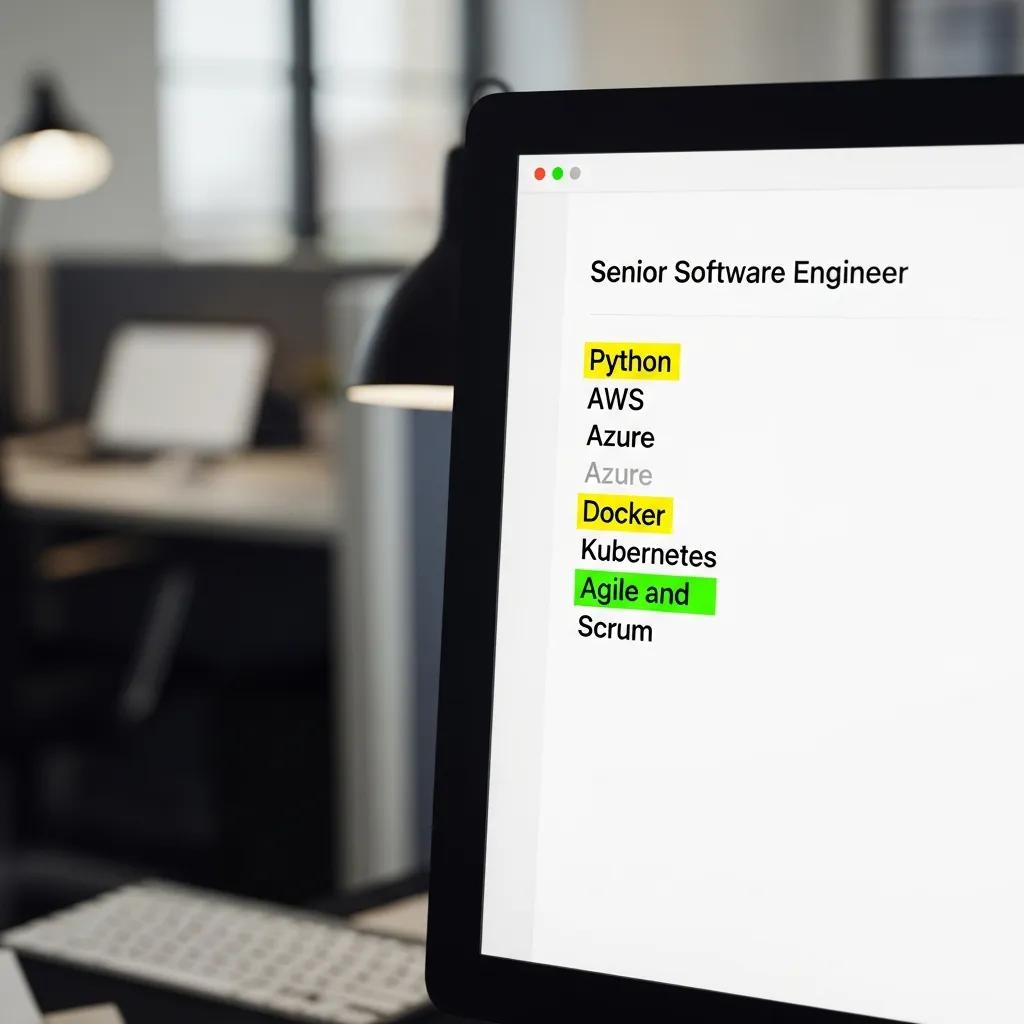
Optimizing your resume keywords is vital for passing ATS filters. This involves identifying and strategically placing relevant keywords throughout your resume to align with the job description. By doing so, you increase the likelihood of your resume being flagged for review by hiring managers.
How to Identify and Use Job Description Keywords Effectively?
To identify effective keywords, start by carefully analyzing the job description. Look for specific skills, qualifications, and industry jargon that are frequently mentioned. Use these keywords in your resume, particularly in the skills and experience sections. This targeted approach ensures that your resume aligns closely with what employers are seeking.
Modern approaches, such as those leveraging Large Language Models, offer advanced methods for ensuring precise keyword alignment and overall ATS compatibility.
LLM-Powered ATS Resume Optimization & Keyword Alignment
The modern hiring process increasingly relies on Application Tracking Systems (ATS) to sort and evaluate resumes based on organizational preferences. However, many skilled and competent candidates fail to craft resumes that are ATS optimized, leading to missed opportunities. This study explores the potential of Large Language Models (LLMs) to enhance ATS compatibility in resumes. Using Natural Language Processing (NLP) techniques, LLMs analyze resumes to identify errors, recommend suitable keywords, enhance semantic alignment, and format content to meet ATS requirements.
Optimizing Resume Design for ATS Compatibility: A Large Language Model Approach, 2024
What Are Action Verbs and Industry Jargon to Include?
Incorporating action verbs and industry-specific jargon can significantly enhance your resume’s impact. Action verbs such as “achieved,” “developed,” and “managed” convey a sense of proactivity and accomplishment. Additionally, using industry jargon demonstrates your familiarity with the field, making your resume more appealing to recruiters. For example, terms like “project management” or “data analysis” can resonate well in technical job applications.
What Is the Best ATS-Friendly Resume Format?

Choosing the right format for your resume is crucial for ATS compatibility. An ATS-friendly resume should be simple, clean, and devoid of complex formatting that can hinder parsing.
Which File Types, Layouts, and Fonts Are Most Compatible?
The most compatible file types for ATS are typically .docx and .pdf, though .docx is often preferred because some ATS have difficulty parsing PDFs. When it comes to layout, use standard headings like “Experience” and “Education” to ensure the ATS can easily identify sections. Fonts such as Arial, Calibri, or Times New Roman are recommended for their readability. Avoid using images, tables, or unusual fonts that may confuse the software.
What Formatting Elements Should You Avoid for ATS Parsing?
To ensure your resume is ATS-friendly, avoid using headers and footers, as many ATS cannot read these sections. Additionally, steer clear of graphics, images, and excessive formatting such as tables or text boxes, which can disrupt the parsing process. Using bold or italics is generally acceptable if used sparingly, but excessive use can cause issues. Keeping your resume straightforward and text-based will enhance its chances of being accurately processed by ATS.
How Can You Tailor Your Resume to Beat ATS Filters?
Customizing your resume for each job application is essential for beating ATS filters. This process involves adjusting your resume to reflect the specific requirements and keywords of the job description.
Why Is Customizing Your Resume for Each Job Crucial?
Customizing your resume increases your chances of passing ATS filters and catching the attention of hiring managers. Research indicates that tailored resumes significantly improve the likelihood of securing interviews. By aligning your skills and experiences with the job requirements, you demonstrate your suitability for the position.
How to Quantify Achievements and Match Keywords Precisely?
Quantifying your achievements can make your resume stand out. Use specific metrics to illustrate your accomplishments, such as “increased sales by 20%” or “managed a team of 10.” This not only provides concrete evidence of your capabilities but also allows you to incorporate relevant keywords naturally. Matching keywords precisely with your experiences enhances the overall effectiveness of your resume.
| Keyword Strategy | Description | Impact Level |
|---|---|---|
| Job Description Keywords | Extracting keywords from job postings | High |
| Action Verbs | Using strong verbs to convey achievements | Medium |
| Industry Jargon | Incorporating relevant terminology | High |
This table illustrates the effectiveness of different keyword strategies in optimizing your resume for ATS. By focusing on job description keywords and using action verbs, you can significantly enhance your resume’s visibility.
In conclusion, mastering ATS resume best practices is essential for job seekers aiming to navigate the competitive job market successfully. By understanding how ATS works, optimizing keywords, choosing the right format, and tailoring your resume for each application, you can improve your chances of passing ATS filters and landing interviews. Implementing these strategies will not only help you stand out in the applicant pool but also position you as a strong candidate for your desired role.
